Cap Spartel Lighthouse: What to Know Before You Go
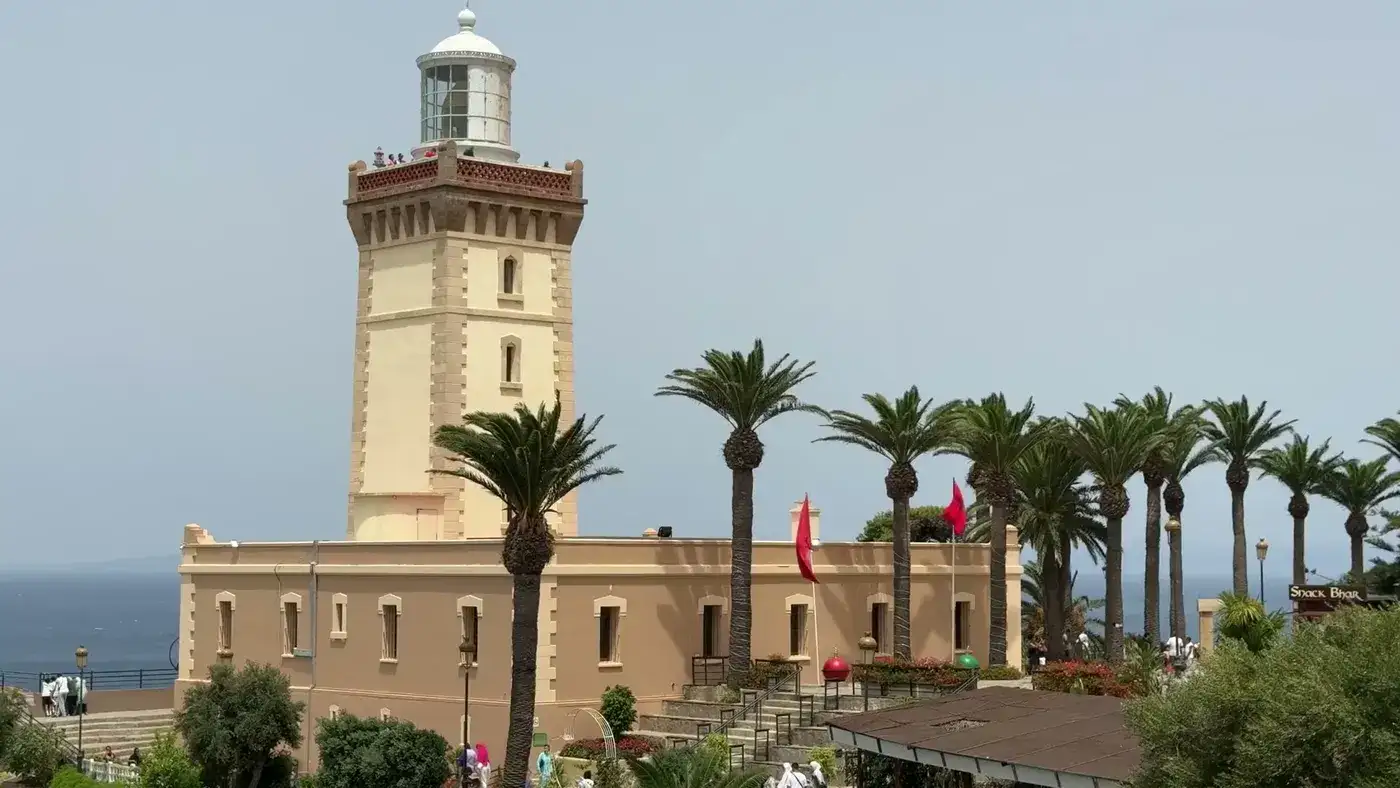
The Cap Spartel lighthouse, built in the 1860s, sits a few minutes past the Caves of Hercules and marks the most northwesterly point of the African continent, where the Atlantic meets the approach to the Strait of Gibraltar. It’s a still-functioning navigational lighthouse rather than a museum, so the tower generally isn’t open for interior visits — the main draw is the grounds, gardens, and cliffside viewpoints around it, which have no entry fee.
Most visitors reach it as a five-minute add-on after the caves, glance at it from the car park, and move on to the viewpoint. That’s a reasonable way to see it, but the headland it sits on has more going on than a quick stop suggests.
A working lighthouse, not a monument
The Cap Spartel lighthouse dates to the 1860s, built under Sultan Mohammed IV with backing from the foreign consulates in Tangier, who had a practical interest in the project: this stretch of coast, where the Atlantic swell meets the funnel of the Strait of Gibraltar, had a long record of wrecking ships trying to round the point. It remains an active, functioning lighthouse today, maintained as a navigational aid rather than preserved purely as a tourist attraction — which is also why, as of our last visit, the tower itself is not generally open for interior climbs. The draw is the headland and the views around it, not the building’s interior.
We’d rather be upfront about that than let you show up expecting a tower climb: treat the lighthouse as a striking backdrop and a photo point, not a ticketed attraction with an entrance.
Why this exact headland matters
Cap Spartel marks the most northwesterly point of the African continent — the place where Africa’s Atlantic-facing coastline ends and curves into the western mouth of the Strait of Gibraltar. That geography is exactly why the site got folded into the Hercules myth in the first place: this headland, and the Rock of Gibraltar visible across the strait on a clear day, are traditionally counted among the Pillars of Hercules from Greek mythology. If you haven’t already, our piece on the Hercules legend and the cave’s real history goes into where that story comes from and how it connects to the caves themselves.
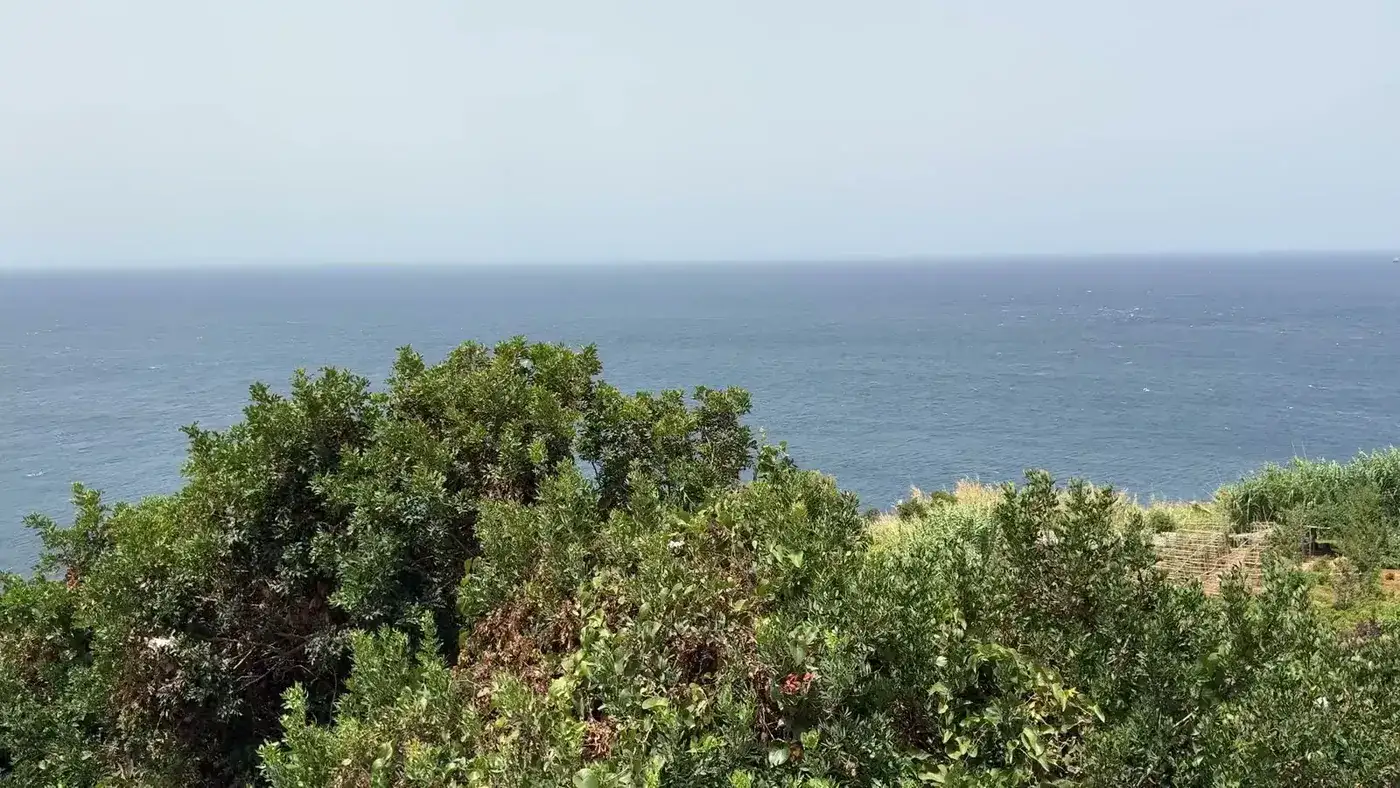
Practically, this also means Cap Spartel is one of the few places on this coast where you can stand and look at both the open Atlantic and, in the other direction, the water that leads into the Mediterranean — without a hard, visible line between the two, but with a genuine sense of standing at a geographic hinge point.
What’s there besides the lighthouse
- The grounds and gardens. Open, walkable space around the lighthouse with sea views in multiple directions — easy underfoot, unlike the caves’ uneven cobblestone floor.
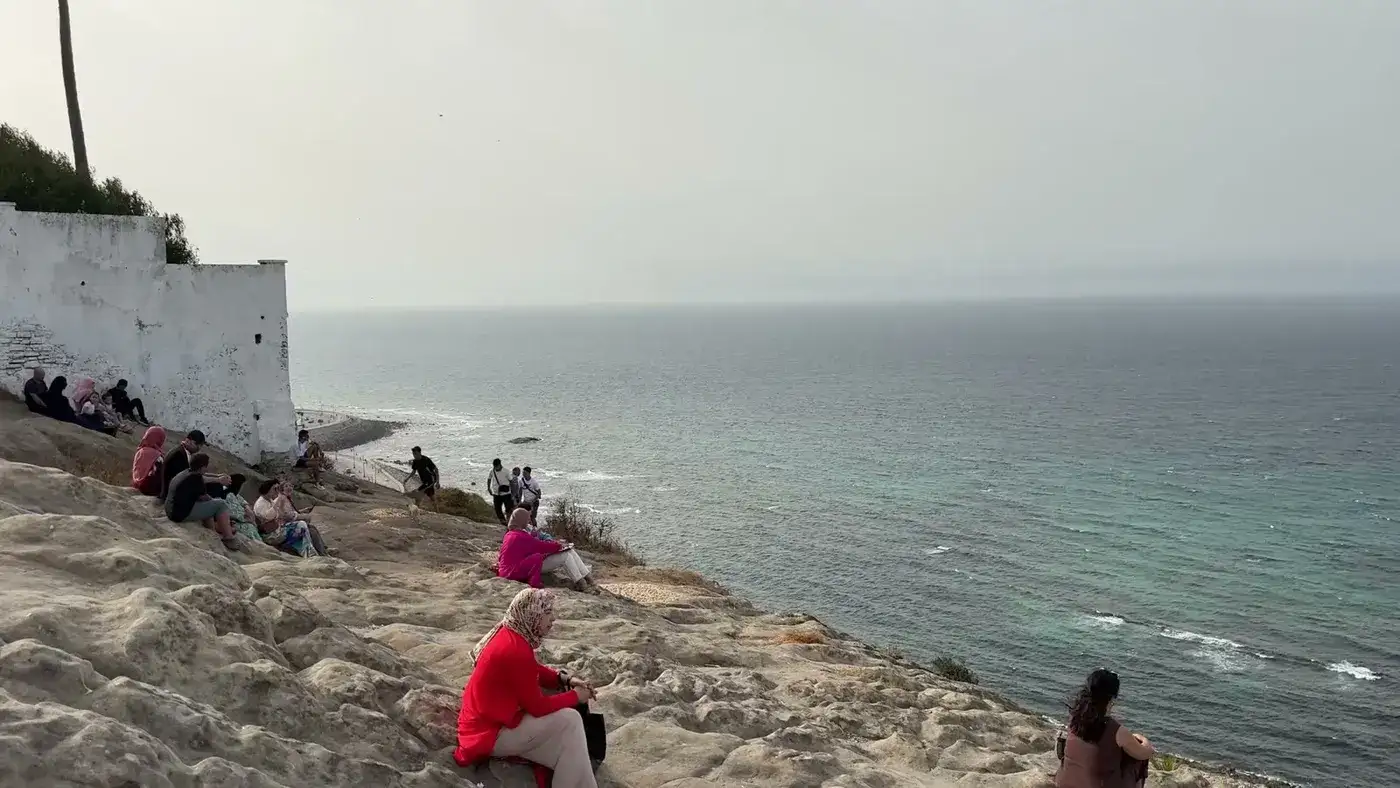
- The cliffside viewpoints. A short walk from the lighthouse itself, these give the widest uninterrupted views of the headland and the Atlantic swell below.
- Informal food stalls and small cafés, seasonal and informal rather than fixed restaurants — useful for a coffee or mint tea stop, not a planned sit-down meal.
- Achakar Beach, a short drive back along the same road, if you want to add a swim to the outing.
There’s no ticket booth and no fixed entry fee to walk the grounds, which makes this an easy, low-cost stop to pair with a paid caves visit.
Best time to visit
Late afternoon light works best for photos of the lighthouse and the cliffs — the same golden-hour advice that applies to the Map of Africa opening at the caves applies here for similar reasons. Expect wind: this headland is reliably windier than central Tangier at any time of year, so a light jacket is worth carrying even on a warm day. If you’re prone to motion sensitivity, be aware the cliffside paths are exposed and can feel more dramatic in high wind than the drive over suggests.
Getting there
The lighthouse sits a few minutes further along the same coast road as the Caves of Hercules, so almost nobody visits it in isolation. If you’re planning transport, our guide on how to get to the Caves of Hercules from Tangier covers taxi, bus, and self-drive options that work equally well for continuing on to the lighthouse afterward. For a full sequenced plan that fits both stops — plus the viewpoint and lunch — into a single outing, see our Caves of Hercules and Cap Spartel half-day itinerary.
Before you go
Pair this with your Caves of Hercules ticket rather than treating it as a separate trip — the two sit close enough together that visiting one without the other, once you’re already out on the Cap Spartel road, would mean backtracking for no real reason.
Caves of Hercules Team
Local visitor guides
We write and fact-check every guide from firsthand visits to the Caves of Hercules and Cap Spartel, so you can plan with confidence.